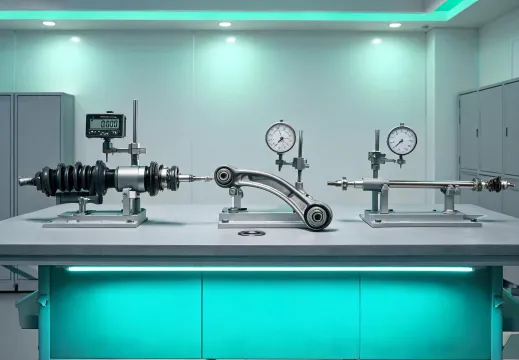
Metrology review
Tolerances are described in relation to OE drawings, mounting surfaces, and measurement control so fitment discussions remain concrete.
GSP focuses on the practical information that helps professional buyers compare suspension, steering, driveline, and clutch components before they enter service or distribution channels.
GSP keeps catalog intelligence, OE reference discipline, and quote support connected so parts teams can evaluate component families with fewer blind spots.
The brand position is test-validated, OE-equivalent, and application-engineered. That means the site language is built around fitment confidence, distributor supply, and service workflows rather than decorative promises. Suspension & Steering Parts receive attention to mounting interfaces, bushing press-fits, threaded tie-rod ends, and fatigue validation. Driveline & Clutch Parts are described through clutch-kit assemblies, CV joint axle context, splined hubs, friction materials, and power-transfer service decisions.
For a wholesale replacement-parts buyer, the useful question is not only whether a component is available. The useful question is whether the part family has enough application logic, cross-reference clarity, and supporting documentation to fit a stocking program. For a specialist performance garage, the priority may be installation sensitivity and service-bay confidence. For OEM and OES sourcing teams, the conversation can include compliance references, tolerance discipline, and published test data. GSP content is arranged to support those different review paths without forcing each team to translate the same product page in a different way.
Tolerances are described in relation to OE drawings, mounting surfaces, and measurement control so fitment discussions remain concrete.
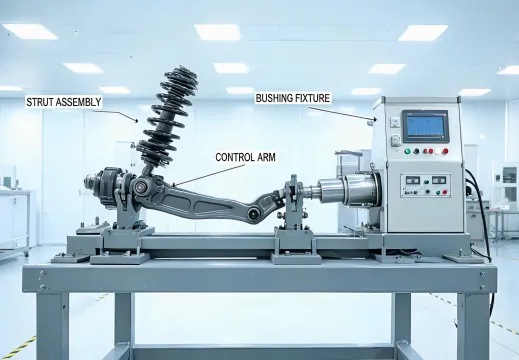
Material, thermal, and fatigue language helps buyers assess how chassis components are positioned for repeated service loads.
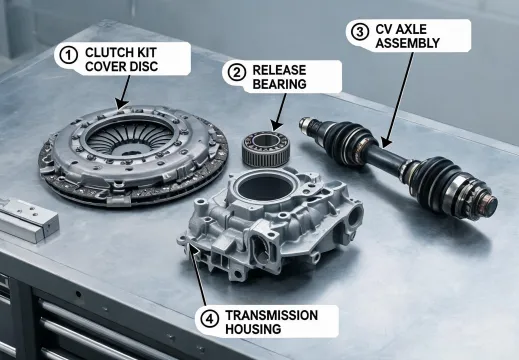
Driveline and clutch references are placed beside transmission and axle workflows so quoting can reflect installation reality.
Bring fitment notes, volume expectations, and documentation requirements into the first conversation so the next step can be more specific.
Talk to GSP